
Injury Risk Prediction · Football
Predict Protect Perform
A machine learning web app that forecasts injury risk for professional football players - so coaches can intervene before the whistle blows on a season.
About the Project
What is 2 to 3 Weeks?
In professional football, "2 to 3 weeks" is the most common phrase uttered when a player gets injured, a vague prognosis that leaves coaches, clubs and fans in the dark. We decided to take that phrase and turn it into a prediction engine.
Our web application ingests 20+ features including player biometric data, workload metrics, historical injury records and match statistics to output a real-time injury risk score. The goal is to give performance staff the early warning they need to rotate squads, adjust training loads and prevent career-altering injuries before they happen.
Beyond professional use, the platform also supports fantasy football players. When building squads and selecting players each gameweek, users can factor in predicted injury risk to avoid short-term absences and maximise points potential.
Built over four sprint cycles with a full-stack architecture, the system pairs a React frontend with a Python ML backend, trained on 2,000+ players across 80,000+ matches.
-
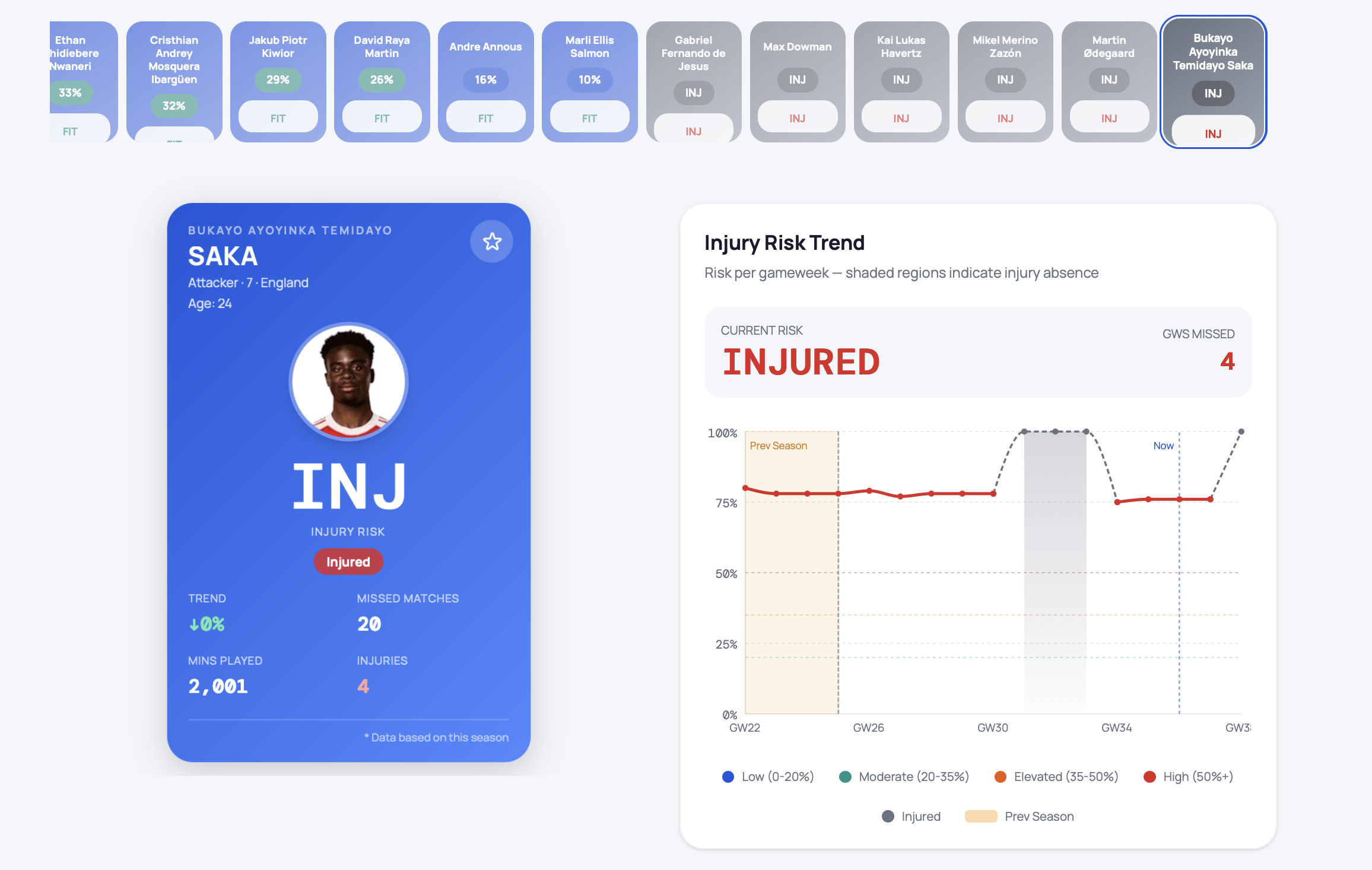
Real-time Risk ScoringPredict injury probability per player based on recent matches and training data.
-
ML-Powered PredictionModel trained on 2,000+ player-seasons of data.
-
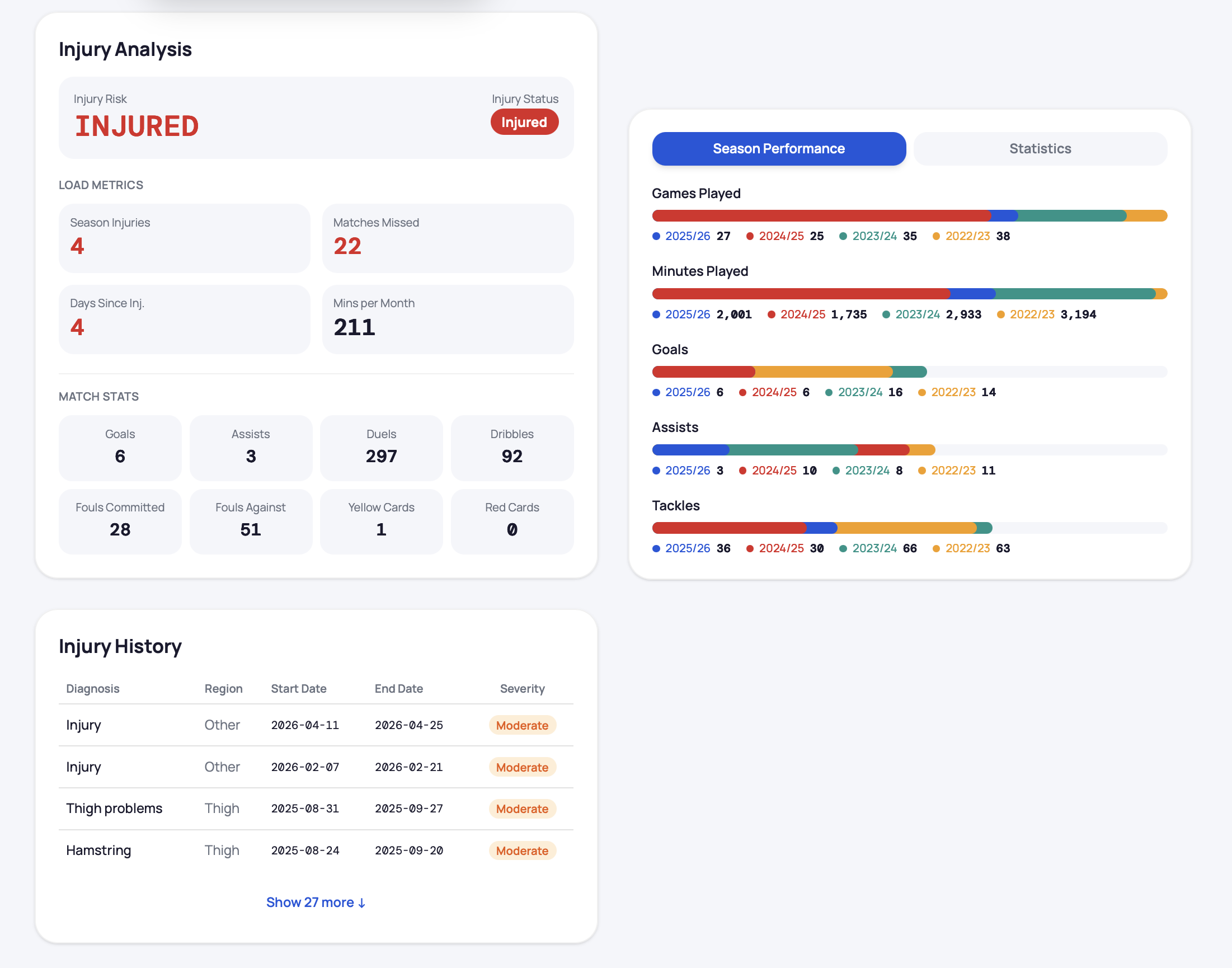
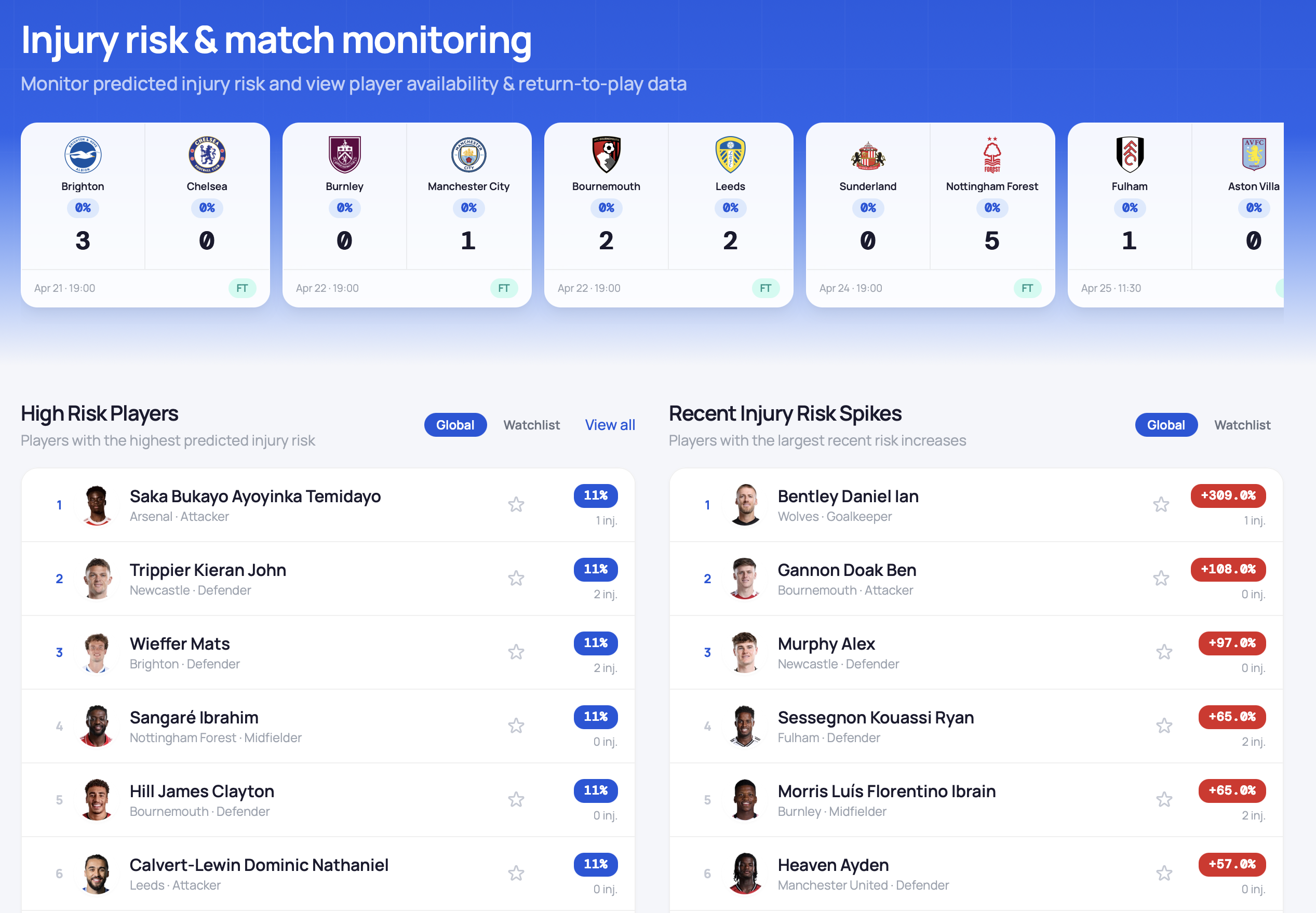
Coach DashboardVisual interface with actionable insights.
Try the Product
Experience "2 to 3 Weeks"
The best way to understand the platform is to try it yourself. Explore real player data, view injury risk predictions, and interact with the dashboard in real time.
Development
Sprint Cycles
The project was built using Agile methodology across four one-week sprint cycles, each delivering a shippable increment of the product.
- Investigated & confirmed API-Football as data source
- Tested multiple algorithms → selected XGBoost
- Feature engineering on player & match data
- Initial database population from API
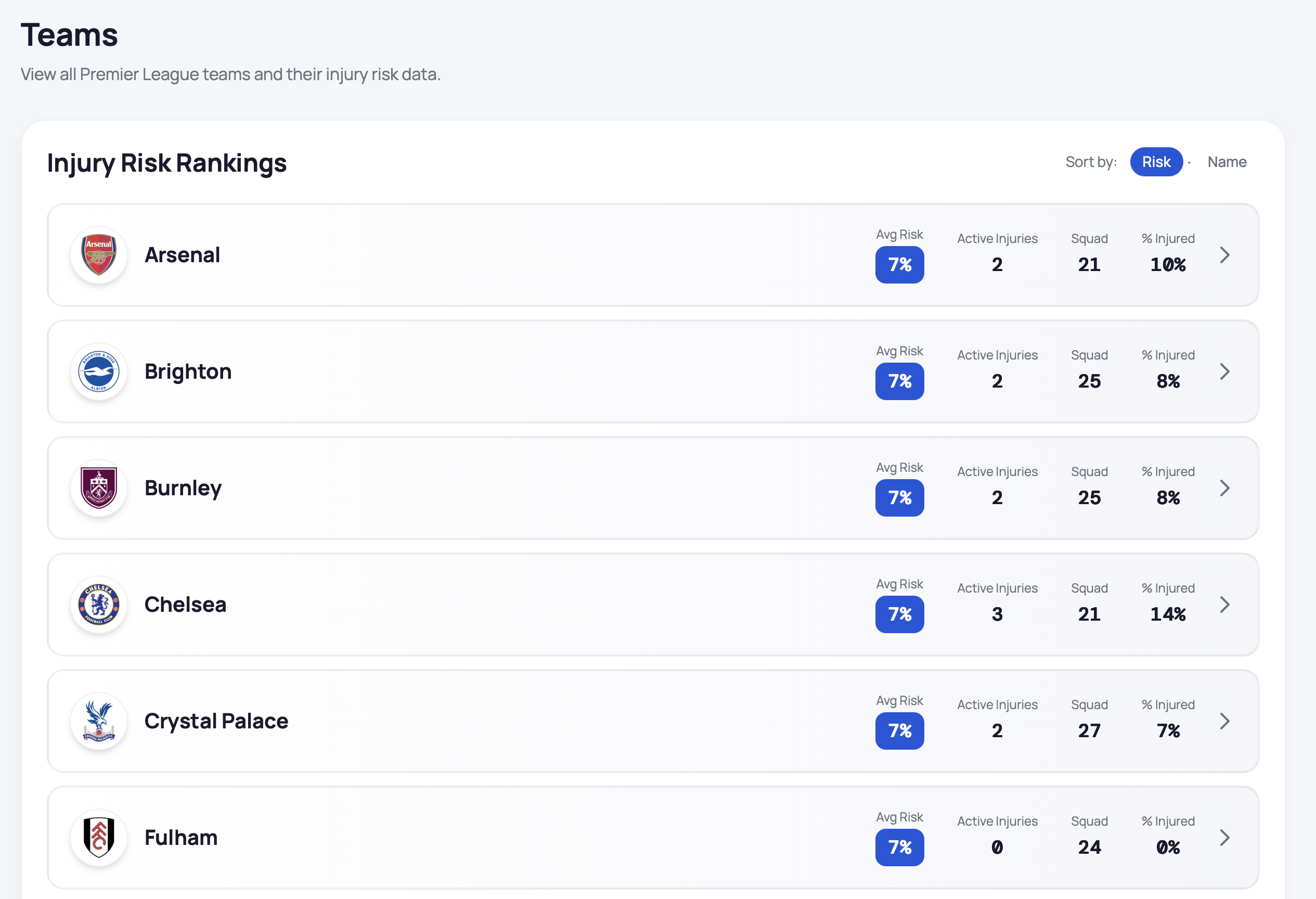
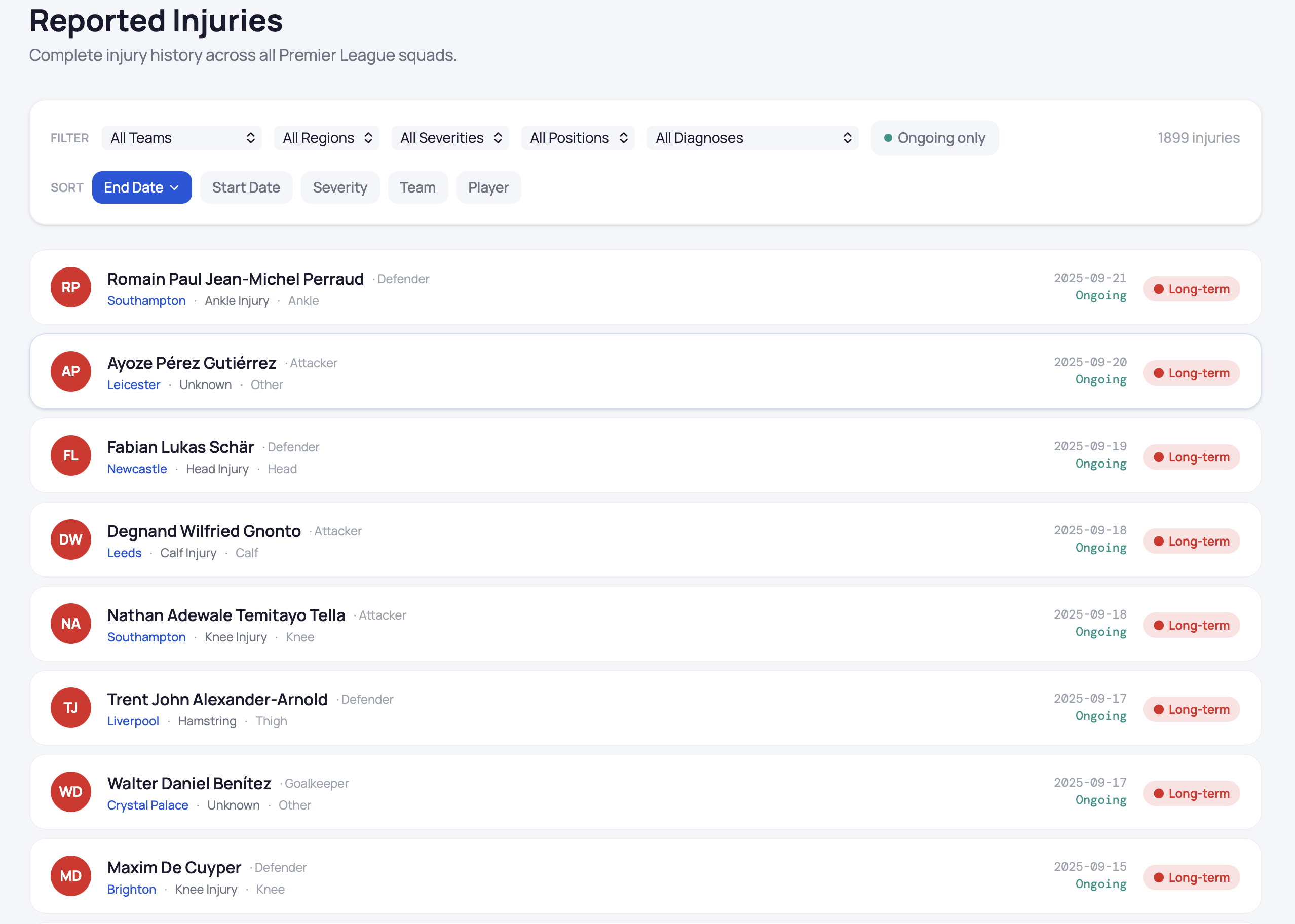
- Created frontend pages: Dashboard, Teams, My Players, Reported Injuries
- Determine API structure for end-to-end data fetching and integrate automatic frontend updates.
- Build Teams page with correct data (logos, names, injury metrics) and sort by injury risk.
- Implement loading indicator with animated blue line during API requests.
- Develop player sorting cards with clickable navigation and color-coded injury risk.
- Create player view and risk trend graph with injury periods highlighted and responsive layout.
- Integrate live API data and replace mock data with automated database updates and ML pipeline
- Develop dashboard with matches overview, risk modules, and player comparison features
- Implement injuries page with filtering, sorting, and navigation to player and team views
- Build search functionality with autocomplete for players, teams, and injury regions
- Enhance prediction model and schedule daily data updates and computations
- Implement relative injury risk multiplier calculated as individual risk divided by league average risk (players with ≥90 minutes in last 30 days)
- Expand risk graph to display full 38 gameweeks with the current gameweek positioned at the right-hand side
- Develop “Statistics” page to transparently report model performance, accuracy and limitations
- Add “How the Model Works — Performance & Transparency” section explaining reliability and known shortcomings
- Introduce disclaimer pop-up on first daily visit and persistent footer disclaimer across all pages
- Enable navigation from reported injuries to individual player pages via clickable interactions
Event
Project Expo
Join us at the final demo where we'll present the live application, our methodology, findings, and lessons learned.
The Team